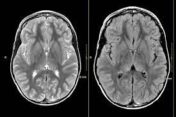

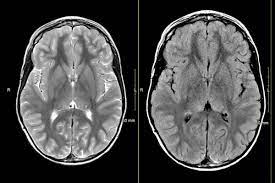
In this introductory series on neurocutaneous syndromes, Dr. Asim Choudhri focuses on neurofibromatosis type 1 and its numerous manifestations in the pediatric patient population. This course outlines what findings are clinically significant, how to characterize this disease in reports and the best possible steps for disease management and observation.
After completing this course, you will be better able to:
- Apply appropriate search patterns to ensure high quality case assessment
- Identify key anatomical landmarks, variations, and abnormalities on imaging
- Accurately interpret advanced imaging cases
- Formulate definitive diagnoses and limited differentials
Introduction to Neurocutaneous Syndromes – 1 min
NF1, Chiari Type 1 – 3 min
NF1, With Waxing and Waning Cystic Lesion – 4 min
Developing myelin vacuolization, Subtle Optic Glioma – 3 min
NF1 with Tortuous Optic Nerve – 6 min
Bilateral Thalamic vacuolization – 5 min
Normal Brain MRI in Patient with Known NF1 – 4 min
Mild phenotype and Left Sphenoid Wing Dysplasia – 3 min
NF1, High grade Glioma – 2 min
NF1, Bilateral Optic Glioma – 3 min
Focal Optic Pathway Glioma in NF1 – 3 min
Fusiform Optic Pathway Glioma, NF1 – 2 min
Optic Tract Glioma in NF1 Patient – 4 min
Developing Right Fusiform Optic Glioma – 2 min
Developing Brainstem Lesion, subtle Optic Glioma – 3 min
Buphthalmos, and orbital plexiform neurofibroma – 3 min
Neurocutaneous Syndromes Summary – 4 min
NF1, Moya moya – 2 min