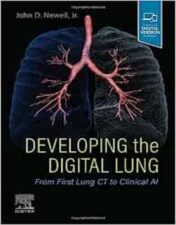

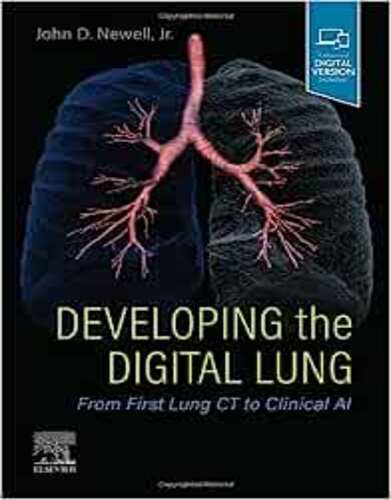
Your go-to resource for all aspects of applied artificial intelligence in lung disease development, including application to clinical medicine, is Developing the Digital Lung, From First Lung CT to Clinical AI, by Dr. John Newell. It reflects recent significant advances in the field of artificial intelligence. It offers a distinctive overview of the subject, starting with a look at the history of AI from the mid-1970s through the early 2020s, when it is applied to clinical practice. This useful, simple resource, which is organized according to the four stages of development, enables you to successfully use artificial intelligences in lung imaging.
demonstrates how applied AI is being used to generate exact quantitative CT of diffuse lung illness, enabling more rapid and accurate identification of patients with lung disease.
Analyzes the CT scanners, manufacturers, and scanning techniques that were used to create the 3D digital maps of the lungs.
explains how the data processed by AI algorithms can yield measurements of pulmonary fibrosis and traction bronchiectasis in patients with idiopathic pulmonary fibrosis (IPF), as well as measures of emphysema, air trapping, and thickening of the airway wall in subjects with COPD.
shows the distinctions between reactive machine intelligence and limited memory AI techniques.
includes thorough case studies and up-to-date data on cloud computing.
With every purchase, an eBook edition is included. With the ability to search, edit your content, add notes and highlights, and have it read aloud, the eBook gives you access to all of the text, figures, and references.